Why Timing Matters More Here Than in Almost Any Other Market
Real estate markets are seasonal everywhere. But Leisure World Seal Beach is not “everywhere.”
This is a gated, age-restricted, cooperative community with its own financial approval process, mutual-specific dynamics, buyer motivations that skew older and often out-of-state, and sellers who are frequently making emotionally and logistically complex transitions.
Which means timing here doesn’t just affect days on market —
it affects leverage, stress, pricing power, and certainty of outcome.
Using monthly listing data from the California Regional Multiple Listing Service (CRMLS) spanning 2020 through early 2025, we can see remarkably consistent patterns in when Leisure World homeowners choose to sell — and when buyers quietly gain the upper hand .
Let’s break this down the way an insider would.
What the Data Actually Shows (and What It Doesn’t)
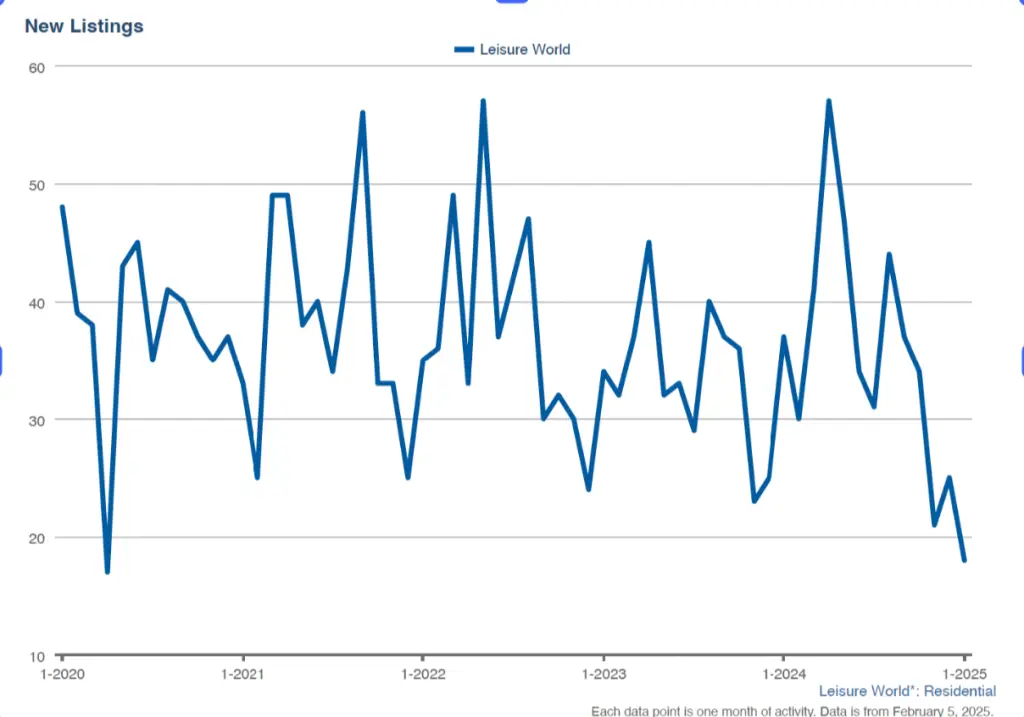
If you glance at the chart alone, the conclusion feels obvious:
• New listings spike between March and June
• Inventory declines sharply in November through January
• There’s often a smaller surge in early fall
But the why matters far more than the when.
In Leisure World, seasonality is driven less by weather (this is Seal Beach, after all) and more by human decision cycles — retirement timelines, health changes, estate planning, tax strategy, and family coordination.
This is not a “kids are back in school” market.
It’s a life-transition market.
Spring & Early Summer: The High-Visibility Window
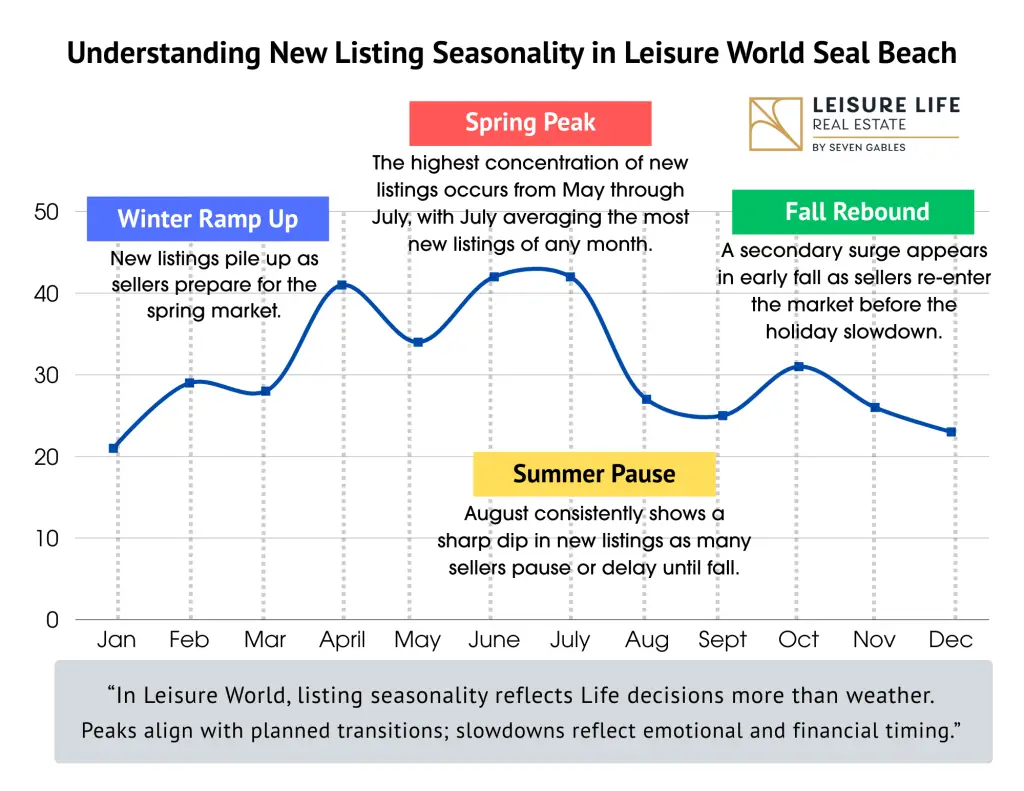
From March through June, Leisure World consistently sees the highest number of new listings.
Why this period dominates:
1. Sellers are psychologically ready
Winter is often a time of contemplation. By spring, decisions that have been brewing — downsizing, moving closer to family, transitioning to assisted living — finally turn into action.
2. Out-of-state buyers are active
A significant percentage of Leisure World buyers come from colder climates. Spring is when they feel comfortable relocating, traveling, and committing before summer heat or fall obligations set in.
3. The community shows better
Longer daylight hours matter more here than people realize. Leisure World homes rely heavily on natural light, atriums, patios, and outdoor pathways. Spring simply presents better.
The upside for sellers:
• More buyers
• More showings
• Greater chance of competitive offers
• Stronger pricing confidence
The hidden downside:
More listings also mean more competition. Sellers who overprice or under-prepare their unit often get lost in the noise.
This is why spring success in Leisure World is less about timing alone — and more about precision.
Fall: The Strategic Second Chance
September and October often surprise people.
While inventory doesn’t match spring levels, there is frequently a noticeable uptick in listings — especially from sellers who missed the earlier window.
Why fall still works:
1. Motivated buyers remain active
Buyers who didn’t secure a home earlier in the year often become more decisive, not less.
2. Financial urgency increases
Some sellers want to complete a sale before year-end for tax, estate, or planning reasons.
3. Pricing realism improves
Fall listings tend to be sharper — better priced, cleaner, and more serious.
For sellers who value certainty over spectacle, fall can be an excellent window.
Winter: Fewer Listings, Quieter Market — and Opportunity
From November through January, new listings drop significantly.
This isn’t because homes stop selling — it’s because most people avoid listing unless they have to.
Why winter slows down:
• Holidays disrupt logistics
• Daylight is shorter
• Sellers prefer to “wait until next year”
• Financial planning resets in January
What most people miss:
Winter buyers are often the most motivated buyers.
They’re relocating for necessity, not browsing. They’ve done the math. They understand the process. And they’re usually less emotional and more decisive.
For sellers who must sell during winter, pricing and presentation matter more than ever — but competition is thinner.
How Smart Buyers Use Seasonality to Their Advantage
Different buyers should shop in different seasons — depending on priorities.
Maximum Selection:
March through June offers the widest choice across mutuals, floor plans, and locations.
Negotiation Power:
Late fall and winter often bring price reductions, fewer competing offers, and more flexibility.
Specific Unit Hunting:
If you’re targeting a particular mutual, building, or layout, peak season increases your odds — but requires patience and speed.
The key is not “buy in the best month,” but buy with a strategy that matches your goals.
How Smart Sellers Master Seasonality, Beyond the Calendar
Yes, spring usually brings the most buyers.
But in Leisure World, the best time to sell is often when:
• Your unit is properly prepared
• Pricing reflects reality, not headlines
• You understand the financial approval pipeline
• You’ve planned your exit logistics in advance
A well-prepared fall or winter listing can outperform a rushed spring listing every time.
The Bigger Takeaway: Timing Is a Tool, Not a Rule
Seasonality provides an advantage only if you understand how to use it.
Leisure World is a nuanced market.
One where emotions, finances, and timing intersect in ways that standard real estate advice often fails to address.
Understanding when listings rise and fall helps —but understanding why people move here, why they leave, and how they decide is what creates real leverage.
That’s where experience inside the community matters.
Thinking About Buying or Selling in Leisure World?
Timing is only one piece of the puzzle.
If you want insight specific to your mutual, your unit type, and your personal goals — not generic market advice — that’s a conversation worth having.